
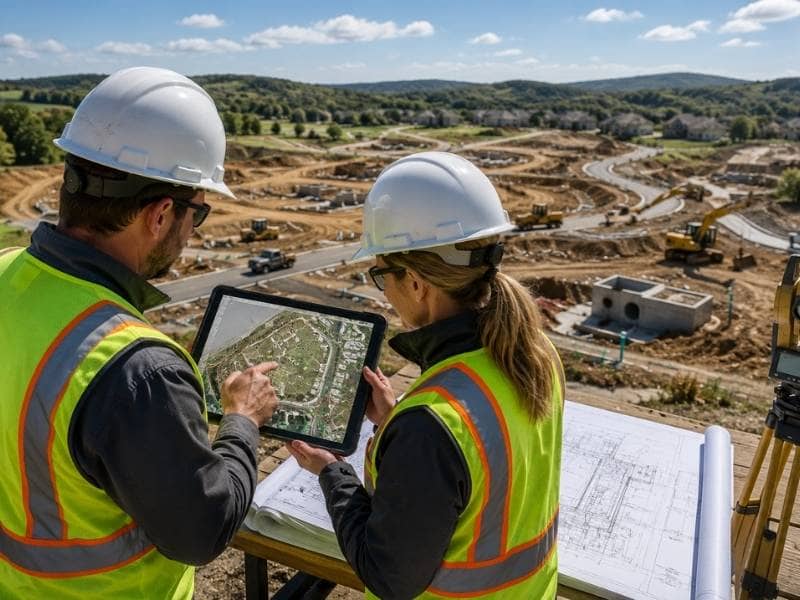
Good projects start with accurate information about the land. Survey mapping gives engineers, architects, and builders the data they need to look at the land, plan improvements, and make smart choices before building starts. Without it, teams often work from guesses that lead to design problems, permit delays, and costly fixes.
Whether the work involves a new building, a home, or roads and utilities, accurate survey mapping helps everyone on the project team understand what they are building on.
How Survey Mapping Creates a Reliable Foundation for Project Design
A survey map does more than show where property lines sit. It shows the full picture of a site: boundaries, land heights, buildings, utility locations, easements, drainage paths, and land shapes. That full picture gives designers something real to work from rather than a rough guess.
Before any design gets drawn, the team needs to know what already exists on the site. A building placed too close to a utility easement may need to move before permits go through. A parking area planned on a low spot may fill with water unless the plan accounts for it. These problems show up early when a survey map exists and late when it does not.
Why Existing Features Must Be Documented Before Site Layout
Every site has features that affect what can be built and where. Some are easy to see. Many are not. A survey map captures both.
Above-ground features that need to be mapped include:
- Buildings, walls, fences, and paved areas already on the site
- Trees and plants that local rules protect
- Roads, curbs, and entry points along the property edge
Below-ground and recorded features matter just as much:
- Water, sewer, power, and communication lines underground
- Easements that limit where things can be built
- Right-of-way areas that reduce the usable part of the lot
A building placed over a utility line that was not found can create a conflict that only shows up when the crew digs into it. Finding everything first keeps those surprises off the job site.
Using Survey Mapping to Plan Land Use and Space
A good survey map helps the design team get the most out of a site. Knowing exactly where the boundaries sit, where easements run, and how the land slopes helps planners place buildings, parking areas, and driveways in the best spots.
Setback rules say how close structures can sit to property lines and roads. Without accurate boundary data, a designer may place a building too close to the line and not find out until the permit review catches it. That kind of mistake means a redesign, and redesigns cost time and money.
Supporting Grading and Drainage with Accurate Survey Data
Height data from a survey map shows how the land slopes, where water flows naturally, and which areas may collect rain after a storm.
Good drainage planning depends on knowing the slopes before any ground gets disturbed. A grading plan built on accurate survey data can move water away from buildings and stop it from collecting in spots that cause long-term damage. Without that data, drainage design becomes guesswork, and grading plans built on rough estimates often need fixes after building starts.
Many local governments also need detailed grading and drainage plans backed by measured height data before they issue building permits. A survey map with solid height information makes that part of the process faster and easier.
How Survey Mapping Reduces Risk During Development
Most costly problems in development could have been caught earlier with better site information. Design conflicts show up on paper before they show up in the field. A utility line running through a planned building gets found during design rather than during digging. An easement cutting across a planned parking area gets handled in the layout phase rather than after the pavement goes in.
Survey mapping also creates a written record of what the site looked like before work began. That record matters during permitting, during construction, and after the project is done when the next owner needs to understand the site.
Projects that start with thorough survey mapping tend to stay closer to their planned schedules and budgets.
Frequently Asked Questions
What is survey mapping?
Survey mapping is the process of collecting and showing land data to create detailed maps used for planning, design, and building.
Why is survey mapping important for site planning?
It gives engineers, architects, and developers accurate information about existing site conditions so they can make good choices before building begins.
What information does a survey map include?
A survey map can include boundaries, land heights, structures, utility locations, easements, roads, drainage paths, and other details that matter for the project.
Who uses survey mapping data?
Developers, engineers, architects, contractors, and property owners all use survey mapping data during land development projects.
How does survey mapping help reduce project risk?
Accurate survey maps help find potential conflicts early, which improves design accuracy and reduces the chance of costly changes during building.
