
ALTA Title Survey Issues Buyers Should Catch Early
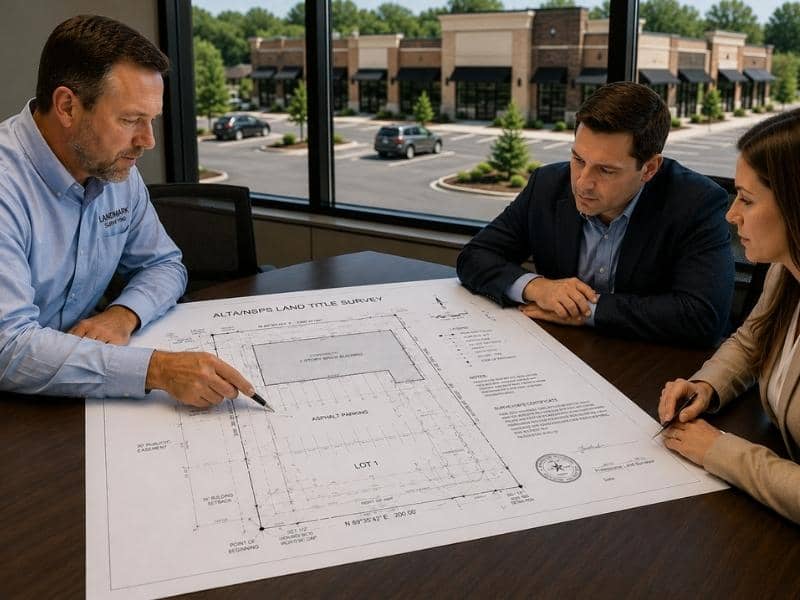
An ALTA title survey helps buyers verify that the property they’re purchasing matches the legal records. By comparing the survey with the title commitment, buyers can uncover boundary issues, easements and encroachments before closing. Finding these problems early provides time to resolve them instead of facing unexpected costs after the purchase.
When the Survey and Title Don’t Line Up
One of the first things a buyer should check is whether the survey and the title records describe the same property. An ALTA title survey maps what actually sits on the ground and ties it to the exceptions listed in the title commitment. When the two don’t match, that gap is a warning worth chasing down early.
Mismatches show up more often than buyers expect. The title might describe a parcel of one size while the survey measures something smaller. A recorded easement might appear on the title but sit in a different spot on the ground. Each difference can change what you’re really buying.
Catch these gaps before closing and you still have room to act. You can ask the seller to resolve the issue, adjust the price or walk away. Once the deal closes, that problem becomes yours to fix.
Easements That Can Limit How You Use the Land
Easements give someone else the right to use part of a property, and they can quietly limit your plans. An ALTA title survey shows where each easement sits and how much of the land it touches. That detail tells a buyer what they can and can’t do after the purchase.
Say you plan to expand a building or add parking. A utility easement running through the middle of the lot could block that plan entirely. You’d rather learn about it during review than after you’ve paid and drawn up designs.
Some easements also affect access. A shared driveway or a right-of-way can control how vehicles reach the site, which matters for a business that depends on deliveries or customer traffic. Knowing these limits early lets a buyer judge whether the property truly fits the plan.
How an ALTA Title Survey Protects a Buyer
An ALTA title survey gives a buyer a clear, verified picture of the property before any money changes hands. It combines a precise boundary survey with a map of improvements, easements and access, all checked against the title. That combination catches problems a title search alone would miss.
The real value is timing. When you review the survey early in due diligence, you still have room to negotiate. You can raise concerns, ask for fixes or reprice the deal while the seller still wants it to close.
For a commercial buyer, that protection is worth a lot. A single missed encroachment or easement can cost far more than the survey itself once you own the property. Spotting it early keeps a good deal from turning into an expensive surprise.
Buildings and Parking That Cross a Line
Structures and paved areas are common trouble spots, and a survey brings them into focus. An ALTA title survey shows exactly where buildings, driveways and parking sit in relation to the property lines and setbacks. Anything that crosses a line can raise a real problem for a buyer.
Parking deserves special attention on commercial sites. A lot that spills onto a neighbor’s land, or relies on spaces the seller doesn’t actually control, can hurt the property’s use and value. A buyer counting on a certain number of spaces needs to know the real count.
Encroachments cut both ways. The seller’s building might cross onto a neighbor, or a neighbor’s structure might sit on the land you’re buying. Either way, the survey flags it so you can settle the matter before it becomes your headache.
Small Problems That Stall a Closing
Small survey issues have a way of growing into closing delays. A minor boundary question or an unresolved easement can make a title company pause or a lender hold funding until someone clears it. What looked like a footnote can suddenly hold up the whole deal.
A few common issues catch buyers off guard:
- A building corner sitting over a setback line
- An easement the title lists but the survey places differently
- Parking or access the seller can’t fully prove
- A gap between the deeded size and the measured size
Reviewing the survey early gives everyone time to sort these out. The seller can fix or explain the issue, and the closing stays on schedule. Leave it too late, and a small item can cost you days, money or the deal itself.
Frequently Asked Questions
What is an ALTA title survey?
It’s a detailed survey that maps a property’s boundaries, improvements and easements, then checks them against the exceptions in the title commitment. Lenders and title companies rely on it for commercial deals. The “title” part means it ties what’s on the ground to what’s on record.
Why should buyers review survey issues early?
Early review gives a buyer time to act while the deal is still open. You can ask the seller to resolve a problem, renegotiate the price or step away before closing. Once you own the property, those same issues become expensive to fix on your own.
Can easements affect a property purchase?
Yes, quite a bit. An easement can limit where you build, how you park or how vehicles reach the site. Reviewing the survey shows exactly where each one sits, so you can judge whether the property still fits your plans.
What problems can delay a commercial closing?
Boundary questions, misplaced easements, encroachments and parking the seller can’t prove are common culprits. Any of these can make a lender or title company pause until someone resolves it. Catching them early keeps a small issue from pushing back your closing date.
Who reviews an ALTA title survey before closing?
On the buyer’s side, the buyer, their attorney and their lender all study it, and the title company checks it against its records. Each one looks for something different, such as encroachments, misplaced easements or boundary errors. Together they aim to catch problems before the deal closes.
