
Why an Elevation Certificate Can Matter After Heavy Rain
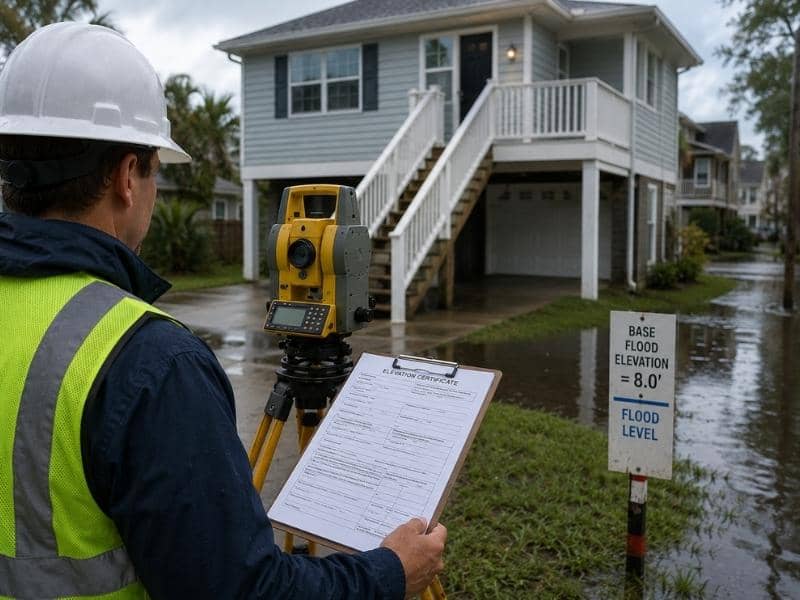
An Elevation Certificate. shows how high a building sits compared to the flood level in its area. This information helps buyers, sellers, lenders, and insurance companies better understand flood risk.
After major storms or flooding, buyers often ask more questions before purchasing a home. An Elevation Certificate can provide clear answers and help buyers feel more confident about their decision.
What Is an Elevation Certificate?
An Elevation Certificate is prepared by a licensed surveyor. It measures the height of a building’s lowest floor and compares it to the base flood elevation established by FEMA.
The certificate shows whether the building is:
- Above the flood level
- At the flood level
- Below the flood level
A flood zone map shows the property’s flood category. An Elevation Certificate provides exact elevation measurements.
Two homes in the same flood zone can have different elevations. Those differences may affect both flood risk and flood insurance costs.
How Heavy Rain Changes Buyer Questions
After a major flood, buyers often want more information about a property.
They may ask:
- Did the home flood?
- How high is the house above the flood level?
- Is an Elevation Certificate available?
People who have seen flooding in nearby areas often want facts instead of estimates. They want information that clearly shows the property’s elevation and potential flood risk.
Sellers who already have a current Elevation Certificate can answer these questions quickly and help avoid delays.
How an Elevation Certificate Helps Explain Flood Risk
A flood zone map provides a general view of flood risk. An Elevation Certificate offers more specific information.
For example, a home that sits two feet above the flood level may face a lower risk of flooding than a home located below that level.
After heavy rain, buyers often compare homes that stayed dry with those that flooded.
An Elevation Certificate can help explain those differences. It provides details that a flood map alone cannot show.
How Sellers Use Elevation Certificates
After a flood, sellers may use an Elevation Certificate to address buyer concerns.
If a home stayed dry during a major storm, the certificate can help explain why.
This can be especially useful for homes located in or near a flood zone.
Without a certificate, buyers may assume the flood risk is higher than it actually is. Providing current elevation information can help buyers feel more comfortable and keep the sale moving forward.
When You May Need an Elevation Certificate
Elevation Certificates are most common for homes located in or near Special Flood Hazard Areas.
Lenders may require flood insurance for these properties. Insurance companies also use the certificate when helping determine flood insurance rates.
After a major flood, buyers may request one even if the property is outside a flood zone.
Having a current certificate available before selling a property can save time and help make the closing process smoother.
Frequently Asked Questions
What does an Elevation Certificate show?
An Elevation Certificate shows the height of a building’s lowest floor compared to the base flood elevation. It also includes flood zone information and details about the structure.
Why do buyers ask for Elevation Certificates after flooding?
After a major flood, buyers often want more than a flood zone label. They may want to know the home’s actual height above the flood level and how that could affect future flood risk.
Do all homes need an Elevation Certificate?
No. They are most common for homes located in or near Special Flood Hazard Areas. However, some buyers may request one after major storms, even if the property is outside a flood zone.
Can an Elevation Certificate affect insurance costs?
Yes. Insurance companies use elevation measurements to help determine flood insurance rates. Homes that sit higher above the flood level may qualify for lower premiums.
Who prepares an Elevation Certificate?
A licensed surveyor prepares the certificate. The surveyor takes measurements, completes the FEMA form, and provides a signed document that may be used for insurance and lending purposes.
