
Drone Land Surveying for Sites That Keep Changing
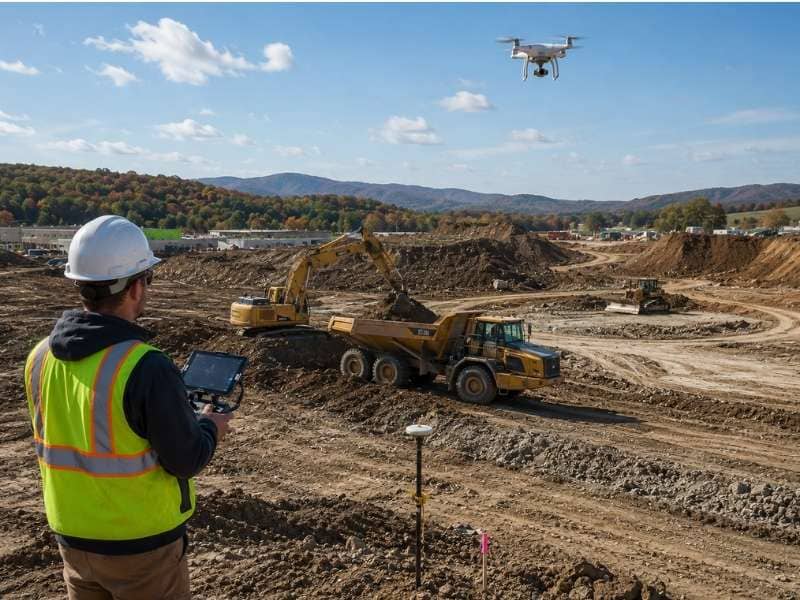
Some sites never sit still. Dirt moves, piles grow and shrink, and the ground looks different week to week. Drone land surveying suits these sites well, because it captures the entire property quickly and can repeat the process as often as needed. A single survey on a constantly changing site goes out of date almost immediately. A drone lets you refresh the picture as often as the work demands. That steady stream of current information helps crews and owners stay ahead of a constantly moving target.
Why Changing Sites Are Hard to Track
A site that changes daily is difficult to measure with traditional ground methods. By the time a ground crew finishes, the ground may already look different. A single survey becomes a snapshot of a moment that has already passed. To manage a moving site properly, you need fresh data captured on a regular schedule.
Plenty of sites change fast enough to need repeat surveys:
- An active construction site during grading and excavation
- A quarry or pit where crews dig out material over time
- A stockpile yard where piles rise and fall each week
- A landfill that fills and reshapes as it grows
- A shoreline or slope where erosion shifts the ground
On sites like these, one survey is never enough. The story is in how the site changes from one visit to the next.
Drone Surveys Capture the Whole Site Fast
A drone flies a set path and records the entire site in a single trip, covering in minutes the acres that a ground crew would need days to map. That efficiency is what makes repeat surveys practical on a busy and demanding site. You can fly it this week, fly it again next week, and keep the data current.
Each flight produces a full, scaled model of the site, not just a few measured points. The drone skips nothing important, because it sees the whole area at once. That complete coverage matters because any part of the site might be the part that moved since the last visit. You get the big picture every single time.
Compare Flights to See What Changed
The real power shows up when you line up two flights side by side. By comparing surveys from different dates, you can see exactly what changed and where. A spot that dropped, a pile that grew, or a slope that slid all show up clearly. That comparison turns raw data into a clear record of progress.
This lets owners and crews answer difficult questions with measured facts. You can confirm that grading matched the plan, or catch a spot that drifted off target. Instead of guessing how far along the work is, you can measure it. The data settles the debate before it starts.
Measure Material and Track Volumes
On many changing sites, the key question is how much. How much dirt has moved, how much material sits in a pile, how much is left to haul. A drone survey can calculate these volumes from the air with impressive accuracy. That saves crews from slow, risky hand measurements on uneven ground.
Tracking material volume over time also keeps a project accountable. You can check that the amount you haul matches the amount you bill. You can plan trucks and schedules around real numbers, not rough guesses. On a site where material moves daily, that kind of count is worth a lot.
Catch Problems Early on an Active Site
A changing site can hide trouble that grows between visits. Water may start pooling where it should not, or a slope may begin to wash away. Regular drone flights identify these developing shifts while they remain small and manageable. Spotting a problem early is far cheaper than fixing it late.
Frequent data also keeps a project on schedule. When you can see the site clearly each week, you make faster and surer decisions, and crews fix small issues before they stall the whole job. That consistent oversight is difficult to match with occasional ground visits alone.
Frequently Asked Questions
How often should a changing site be surveyed by drone?
It depends on how fast the site moves and what you need to track. An active earthwork site might call for a flight every week or two, while a slower site may need one each month. The goal is to fly often enough to catch changes while they still matter.
Can drone surveys measure stockpile or dirt volumes?
Yes, measuring volumes is one of the strongest uses of a drone survey. The software builds a model of each pile and calculates how much material it holds. That gives crews a fast, safe count without climbing over the piles.
How does a drone survey show what changed over time?
Each flight creates a dated model of the whole site. By comparing two flights, the software highlights where the ground rose, dropped, or shifted. That makes it easy to see and measure the change between any two dates.
Is drone surveying good for active construction sites?
Yes, active sites are a great fit because they change so often. A drone captures the full site quickly and can return as often as the work requires. That keeps everyone working from a current picture instead of an outdated one.
Can drone data track grading and earthwork progress?
Yes, drone data is well suited to tracking grading and earthwork. Repeat flights show how much soil moved and whether the work matches the plan. Crews can use that to confirm progress and adjust where needed.
What kinds of sites change enough to need repeat surveys?
Sites with frequent earth movement benefit most, such as construction projects, quarries, and stockpile yards. Landfills and eroding slopes also change enough to track over time. If the ground shifts often, repeat surveys keep the data useful.
