
Why a Flood Elevation Certificate Remains in High Demand
A flood elevation certificate is one of those papers that never goes out of style. It shows how high a building sits next to the flood line. That one fact drives big choices about insurance, sales and permits. As floods get worse and pricier, demand for it stays strong. For a lot of owners, it’s quietly one of the handiest documents they own.
What Is a Flood Elevation Certificate?
A flood elevation certificate is a simple form that reports a building’s height. A surveyor measures a few key spots, like the lowest floor and the ground around it. Those numbers go on the form. They show where the building sits next to the flood level. That level is how high water could rise in a bad storm.
The comparison is the whole point. If the lowest floor sits above the flood line, the risk is low. If it sits below, the risk and the cost go up. The form puts this in plain numbers, not guesses.
For a buyer or owner, that means clarity. You don’t have to wonder how risky a property is. The certificate lays out the facts that insurers and lenders will ask for.
Why a Flood Elevation Certificate Is Often Needed When Buying or Selling Property
A home sale brings the certificate out fast. Buyers want to know the flood risk before they commit. A current form answers that with hard numbers. It beats a hopeful guess every time.
Sellers gain from it too. A form that shows a home sitting high and dry can calm a nervous buyer. It can even help hold the asking price. Without one, a buyer may fear the worst and walk.
Lenders often have the final say. For a home in a flood area, a lender usually wants proof of height before the loan clears. A ready certificate keeps the deal from stalling. It turns a roadblock into a quick check.
How a Flood Elevation Certificate Helps During Insurance Reviews
Insurance is where the certificate pays off most. Insurers price flood coverage on risk. Risk leans heavily on height. The higher a home sits above the flood line, the less likely it floods. The form gives the insurer exact numbers to score that.
With no form, an insurer assumes the worst. It may rate the home as if it’s the most exposed one on the street. That guess often means a higher bill than the home should get.
A good certificate fixes that. It shows the true height, so the rate matches the real risk. For a home well above the flood line, the right paper can cut the yearly cost by a lot.
Why Many Property Owners Keep a Flood Elevation Certificate on File
Smart owners keep their certificate long after they first get it. The form doesn’t expire on its own. The height it records rarely changes. That makes it a handy thing to keep close.
A certificate on file helps in several spots:
- Shopping or renewing flood insurance, where the numbers back a fair rate.
- Selling the home, since the form is ready for the next buyer.
- Answering a lender or agency question about the building’s height.
- Planning an addition that has to follow flood rules.
Keeping it also saves time and cash later. Hunting down a lost form, or paying for a new survey, can stall a sale at the worst time. File it away once, and you skip that scramble.
How a Land Surveyor Can Help With a Flood Elevation Certificate
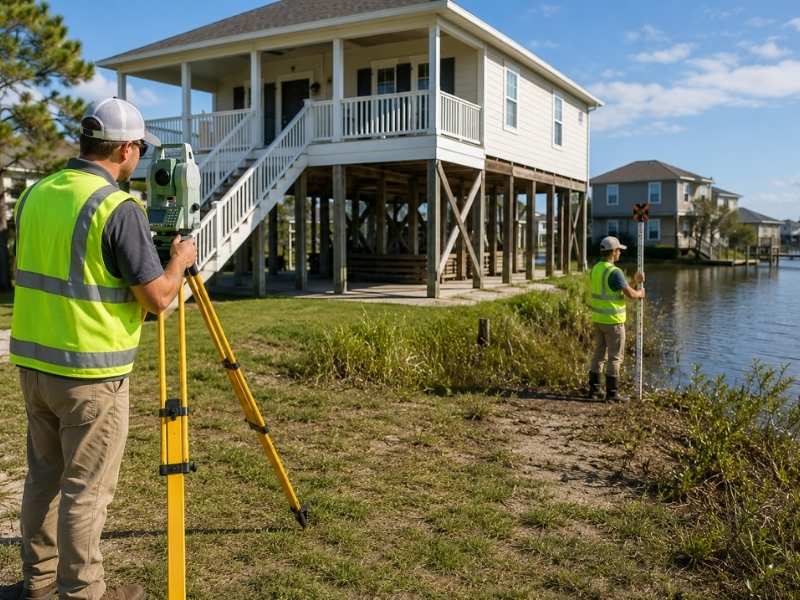
A licensed land surveyor makes the certificate official. The job starts with a visit to the property. With precise tools, the surveyor measures the lowest floor, the ground nearby and the other points the form needs.
Next, the surveyor ties those heights to a known mark. They compare them to the flood level for the area. Then they record it all on the form and sign off that the numbers are right. That signature gives the document its weight.
The work is faster than most people think. For a typical home, the field visit takes one trip. The finished form follows soon after. A surveyor who knows the local flood maps makes it smoother and more reliable.
Frequently Asked Questions
What is a flood elevation certificate?
It’s a form that shows how high a building sits next to the flood line. A surveyor measures the home and notes the height of its lowest floor and the ground around it. Those numbers show how exposed the property is.
Why might I need a flood elevation certificate?
You’ll often need one to buy, sell or insure a home in a flood-prone area. It gives buyers, lenders and insurers the height facts they trust. Owners also use it to update records or plan new work.
Who can prepare a flood elevation certificate?
A licensed land surveyor measures the property and fills out the form. Their training is what makes the numbers official. That is why insurers and lenders trust it.
How is a flood elevation certificate created?
A surveyor visits the home and measures its key heights with precise tools. They compare those heights to the area’s flood level and record them on the form. Then they certify that the results are right.
Can a flood elevation certificate help property owners?
Yes. It can lower flood insurance costs by proving a home sits above the flood line. It also speeds up a sale and answers height questions for years after.
